Introduction to the Courses
Rather than narrate ancient history, we will follow in the footsteps of the explorers who discovered the ancient sites, we will sift through the reports of the archaeologists who dug them, and let source documents inform your understanding of the ancient world. By the end of the course you should be able to walk through a major museum and see details in an artifact’s construction you might not have noticed before; you should know something of its historical and geographical context; and understand some of the controversies surrounding its interpretation.

Some of the topics covered in this course:
- the remarkable expansion of Uruk
- all about mining and smelting copper, making plaster, turning pots, and storing grain
- how old are the Ghassulians and what is their connection with the Canaanites?
- the formation of pharaonic Egypt and its surprising Mesopotamian connection
- the Kura Araxes culture and its eventual spread to Canaan
- the strange hybrid-creatures of the Proto-Elamite period
- where did the Sumerians come from, and where did they go?
- the burial mounds of Dilmun and seafaring civilization of Magan
- the largest temple ever found in Canaan
- the strange wreath-cities of Syria
- Ebla’s great archive
- the early Hittite / Hattic kings and queens buried beneath Alacahoyuk
- hard times in the EB IV
- the fall of Ur
The following topics are covered in this course:
- the Great Code of Hammurabi
- the flourishing of the Minoan and Mycenaean civilizations
- the Minoan bull-leapers
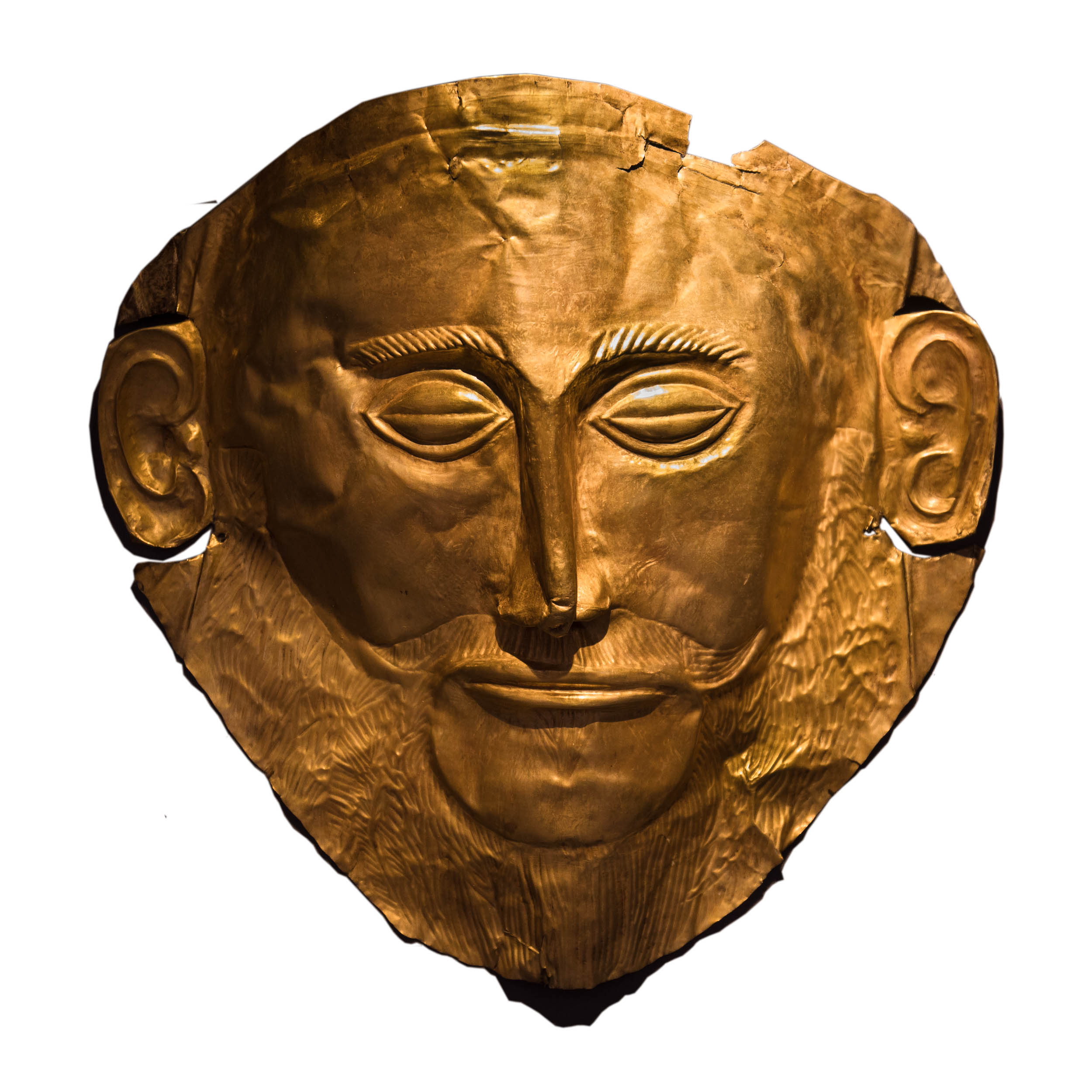
- the grave circles of Mycenae
- the brilliant Twelfth dynasty, its decline, and the arrival of the Hyksos
- the great Anatolian civilization of the Hittites
- the golden Eighteenth dynasty of Egypt and the ensuing chaos of the Amarna period
- what happened at Sinai?
- the Israelite conquest of Canaan
- Ramses II and Muwattali II meet for battle at Kadesh
Development in progress. For now we are adding standalone entries to the course outline as they are completed.
This course covers the period that extends from the arrival of the Sea Peoples in the eastern Mediterranean to the Neo-Babylonian Empire.
This course covers the Persians, Greeks, and Romans.
Where do archaeology, theology, and philosophy intersect? This course takes a close look at some less well known aspects of the archaeology of the Holy Land in order to answer the question: what can we learn about a people from what they left behind?
FAQ
The course content is available for free of charge but if you wish to track your progress and take the quizzes then you will need to sign up for the course.
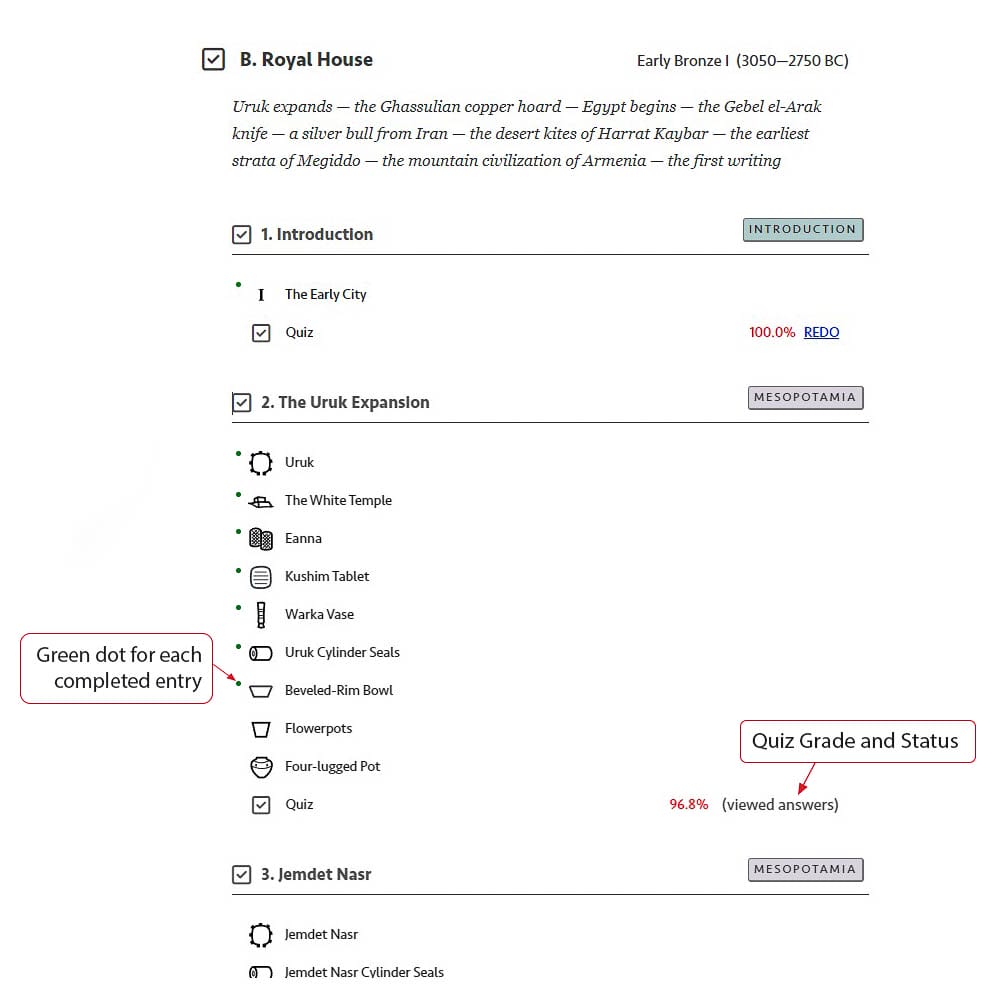
- Each entry concludes with a review question. Although the review questions do not count towards the final score, a green dot will appear next to the entry in the course outline when the review question is completed. A green dot indicates that the student has completed that entry.
- Quizzes are worth 30%, Period Quizzes are worth 40%, and the Final Exam is worth 30%.
- Students get three redos for quizzes and one redo for period exams. Just click the redo button next to the quiz or exam in the course outline.
- Quiz and exam scores are stored on the course page and in the sidebar for each course entry.